
Fender "Body Art"
Weighing in on current events in the guitar community.

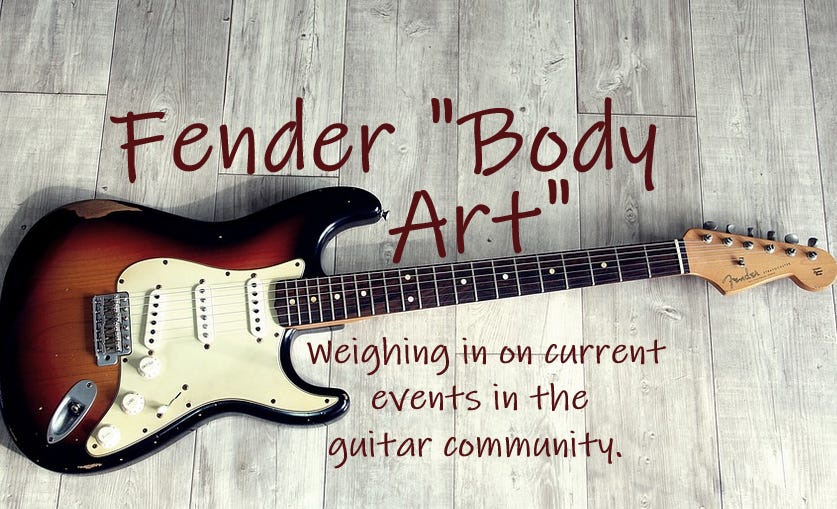
Over night my social media feeds have become saturated with Fender’s current lawsuit. In short, Fender is claiming that their body style is intellectual property and that all other guitar makers cannot use their “art style”. So let’s look at the S-Style Fender.
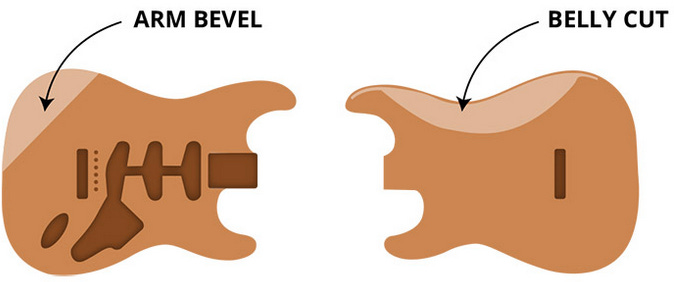
Yup. There it is. And I get it. Fender wants to protect it’s look, which is the main argument for the lawsuit. But consider taking a block of wood and slapping a neck, strings, and a few electronics on it. It’ll play and, with the right know-how, it might sound pretty good. Now imagine sitting for a performance with a literal block of wood in your lap. That’s not too comfy. To fix that we need to carve out a curve for your human leg so that it’s actually comfortable to play. While we’re at it, we might want to carve out a curve on the other side for that human arm you’ll have to manage. It sure would make strumming easier.
Am I sounding sarcastic? Good.
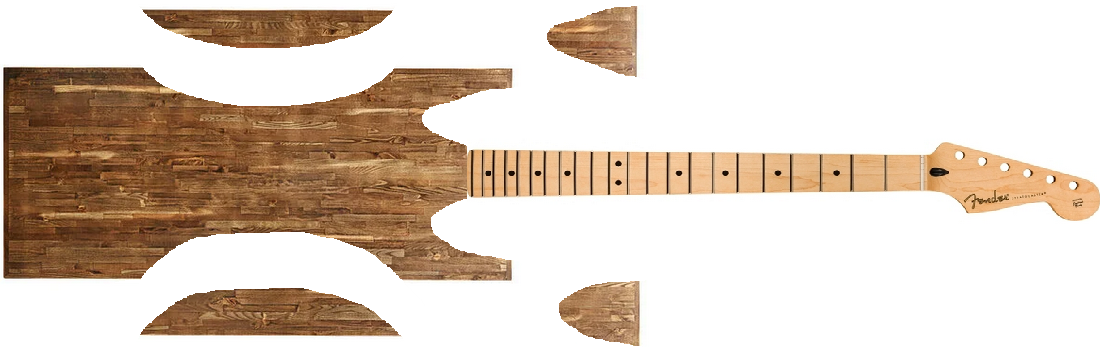
Now let’s look at where the neck connects to that block. We really can’t get our other hand to the higher frets unless we carve out some space on both sides of the neck. Oh, look! Now it looks like the shape of a basic guitar.
Who… could… have… guessed… that..?
So the lawsuit is about art and that the body style is art. That’s fine. I agree that protecting art is important. But lets look at some other guitar bodies.

Each of these guitars has a shape that is the result of turning a block of wood into a playable instrument. The differences are in the details. So what makes a Fender’s art unique? I’d say the geometry that is not mandatory for a playable instrument. That allows for things like, well, the horns. These are the two slim sections along either side of the neck. Let’s look at them a little closer.
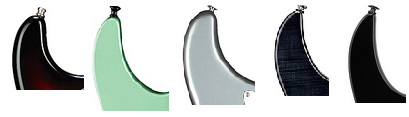
In comparison, each one is a little different. The only one that stands out as matching Fender’s horn is the PRS Silver Sky. So let’s compare just those two
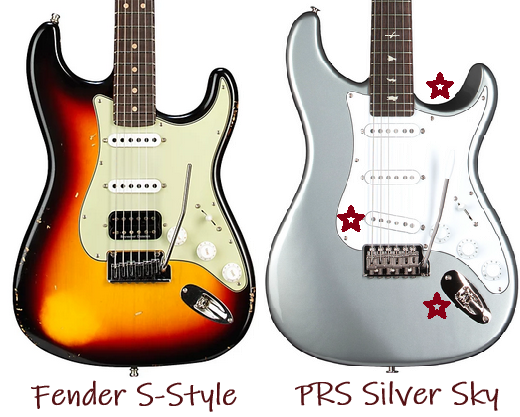
This is starting to feel like one of those kid’s games where you spot the difference. Right away I see three that I’ve marked with red stars. From bottom to top there’s the angle of the jack plate, the bridge pick-up slot, and then the double-cutaway for ease of access for the fretting hand.
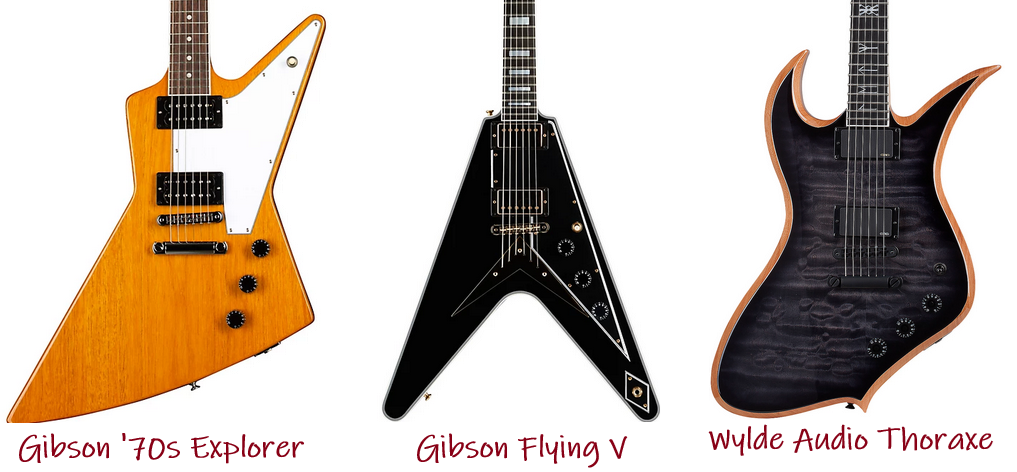
Now there are other body styles of guitars. The Explorer, Flying V, and newer designs like the Thoraxe are all unique shapes. So when does a guitar “shape” stop being a functional part of an instrument and start becoming art? While you consider what art is, keep in mind that there are plenty of music books out there that use this basic body style on the cover. Is this art? Is this stealing intellectual property? Or could this be considered a promotion? Does Fender owe writers and publishers for the promotion of their body style by using it on the covers of books?

Now this is all quite ridiculous to me. In fact, when I pick up a guitar to try it out I am not judging the instrument by body shape. The first thing I look at is the neck shape. If my fretting hand is happy, then I am happy. Else, I can’t get my hand into a comfortable position to play and I’ll immediately put the guitar back on the rack. And Fender knows this! That’s why there are so many neck shapes!
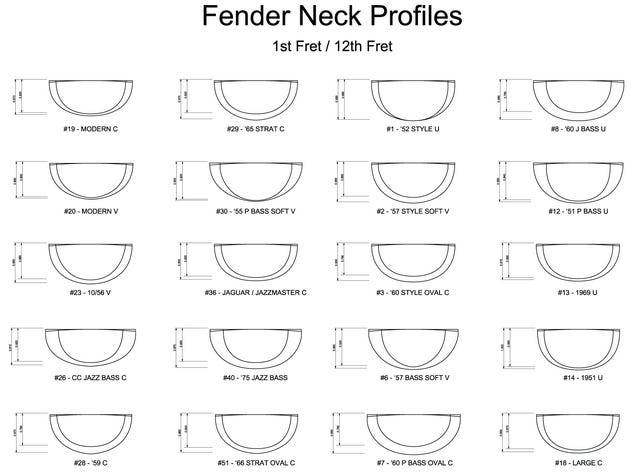
I could go on and on about the specifics of a guitar’s design, but that’s not what’s at the core of this situation.
Meet Bud Cole, the new CEO of Fender as of February 16th, 2026. It hasn’t even been a year into his stewardship of the company and he starts a lawsuit over “art”? Well Mr. Cole has a Bachelor’s degree in Arts in English Literature. Not much of a guitar guy so far.

After digging a little more I found out that he used to work for Ralph Lauren, Louis Vuitton, and QVC. There it is! It’s not about art. It’s about branding and weaponizing the phrase “intellectual property” for profits. Unfortunately for Fender, the guitar community and even lawyers are posting videos that are calling this what it is: a bad move for the company.

And that’s sad. The company has been around since 1946 and for guitarists Fender feels like the friendly old guy that sits on his front porch playing his guitar every morning. He gives advice to the up-and-comers and is part of the musical neighborhood. When I look up at a wall of guitars I see the new kids on the block with their stained wood grain, but its good to see the founders that have been around since the beginning. Hopefully this whole thing just goes away so I can look at this as my friendly old neighbor just yelling at clouds. For others, there may be some trust that needs to be earned back. Now I’ve never ran a company before, but a good place to start might be giving the top spot of a guitar company to a guitar player.
And that’s all I have to say about that.
